


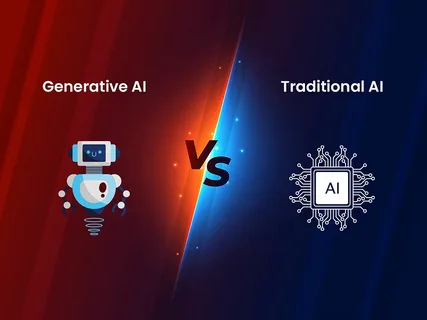
The landscape of video production has shifted dramatically in the past few years. Artificial intelligence tools now enable creators to generate high-quality video from text prompts alone, while traditional production—rooted in human crews, physical equipment, and established workflows—remains the backbone of most professional content. This article examines the core distinctions between these two approaches across multiple dimensions, providing a clear framework for understanding when each method excels and where trade-offs emerge.
Workflow and Production Process
Traditional video production follows a linear, multi-stage pipeline that typically spans weeks or months. Pre-production involves scripting, storyboarding, casting, location scouting, and detailed planning. Production requires coordinating directors, camera operators, lighting technicians, sound engineers, and actors on set. Post-production then demands extensive editing, color grading, sound design, visual effects integration, and final mastering.
AI video generation collapses this sequence into minutes or hours. A user inputs a text prompt, selects style parameters, and the model outputs a complete clip. Tools like OpenAI’s Sora, Kling AI, Runway Gen-3, and Luma Dream Machine handle camera movement, lighting, and basic motion internally. Iterative refinement occurs through prompt adjustments rather than reshoots or re-edits. The entire process can be managed by one person without leaving a laptop.
This structural difference fundamentally alters creative control. Traditional methods allow precise, real-time adjustments on set—changing an actor’s delivery or repositioning a light. AI methods rely on probabilistic generation, where outcomes depend on training data and model interpretation, often requiring multiple generations to achieve the desired result.
Time Requirements
Speed represents one of the starkest contrasts. A 30-second commercial shot traditionally might require 2–3 days of filming plus weeks of post-production. The same length generated by current leading AI models can be completed in 5–20 minutes, depending on resolution and complexity.
However, time savings diminish with project scale and specificity. Complex narratives with consistent characters across multiple scenes still challenge AI systems, often necessitating manual stitching of separate generations or extensive prompt engineering. Traditional pipelines, while slower, are designed for long-form consistency and remain the standard for feature films and high-budget series.
Cost Structures
Budget differences are equally pronounced at entry levels. Traditional production carries high fixed costs: equipment rental, crew salaries, location fees, insurance, and post-production facilities. Even a modest short film can cost tens, crew, and facilities easily reaching tens or hundreds of thousands of dollars.
AI video dramatically lowers the barrier to entry. Subscription fees for commercial tools range from $20–$200 per month, with per-minute generation costs for premium services typically under $1–$5 for high-quality output. Independent creators can produce professional-looking content without capital investment in cameras, lights, or editing suites.
At the high end, however, the economics converge. Major studios using AI still employ human directors, prompt engineers, and post-production teams to refine AI outputs, maintaining six- and seven-figure budgets. Traditional blockbuster productions continue to command $100–$300 million budgets due to star salaries, marketing, and global distribution requirements.
Creative Control and Artistic Direction
Traditional production grants directors near-total control over every frame. Cinematographers choose specific lenses, lighting ratios, and camera movements. Actors deliver nuanced performances shaped by direction and collaboration.
AI systems offer a different paradigm: creative direction through language and reference images. Skilled prompt engineers can achieve remarkable specificity, but the model ultimately interprets intent. Subtle emotional performances remain difficult to direct precisely; AI-generated faces sometimes exhibit uncanny valley effects or inconsistent micro-expressions.
Many filmmakers now adopt hybrid approaches, using AI for pre-visualization, background plates, or complex visual effects that would otherwise require expensive practical shoots. This integration preserves human artistic oversight while leveraging AI efficiency.
Technical Quality and Realism
As of early 2026, top-tier AI models produce visually stunning footage with coherent motion, realistic physics, and sophisticated camera work. Advancements in temporal consistency have largely resolved earlier issues with flickering or morphing objects. 4K resolution and complex scene composition are now standard in leading platforms.
Yet traditional production still leads in absolute fidelity for certain elements. Professional cinematography with high-end cameras captures nuanced skin tones, natural light falloff, and depth that AI struggles to match perfectly in all conditions. Practical effects and location shooting provide texture and authenticity that generated content can approximate but not always replicate.
Sound design marks another clear divide. AI video tools focus primarily on visuals; audio must be added separately, often using traditional recording methods or additional AI voice and music generators. Traditional productions integrate sound from the start, capturing authentic foley, dialogue, and ambience.
Accessibility and Democratization
AI has profoundly democratized video creation. Individuals with storytelling ideas but no technical background can now produce compelling visuals. This shift has fueled explosive growth in short-form content on platforms like TikTok, YouTube Shorts, and Instagram Reels.
Traditional production remains gated by expertise, networks, and resources. Film schools, industry connections, and years of experience continue to shape who gains access to professional opportunities.
Consistency Across Long-Form Content
Character consistency across scenes represents a persistent AI challenge. While tools have improved significantly with features like character reference images and motion brush controls, maintaining exact likeness, clothing, and lighting across dozens of shots remains labor-intensive. Traditional productions achieve this through continuity supervisors, costume departments, and makeup teams.
Narrative coherence also favors traditional methods for complex stories. AI excels at individual striking images or short sequences but can introduce subtle logical inconsistencies in longer generations.
Ethical and Regulatory Considerations
Traditional production operates within established labor laws, union regulations, and copyright frameworks. AI video raises new questions around training data usage, likeness rights, and job displacement. Several high-profile lawsuits continue to shape how studios can legally deploy generative tools.
Deepfake concerns and misinformation risks have prompted platforms to implement detection tools and watermarking for AI-generated content, adding another layer of consideration absent in traditional workflows.
Selecting the Optimal Approach
The choice between AI and traditional production increasingly depends on project goals rather than absolute superiority. Short-form marketing content, concept videos, and rapid prototyping favor AI speed and cost advantages. Narrative films, documentaries requiring authentic locations, and premium branded content typically demand traditional craftsmanship.
Many professionals now view these methods as complementary rather than competitive. The most effective future workflows will likely combine AI efficiency for certain tasks with human expertise for emotional depth and artistic precision.
As AI capabilities continue to advance, the boundary between generated and captured footage will blur further, potentially redefining what “traditional” production means in the coming decade.
