


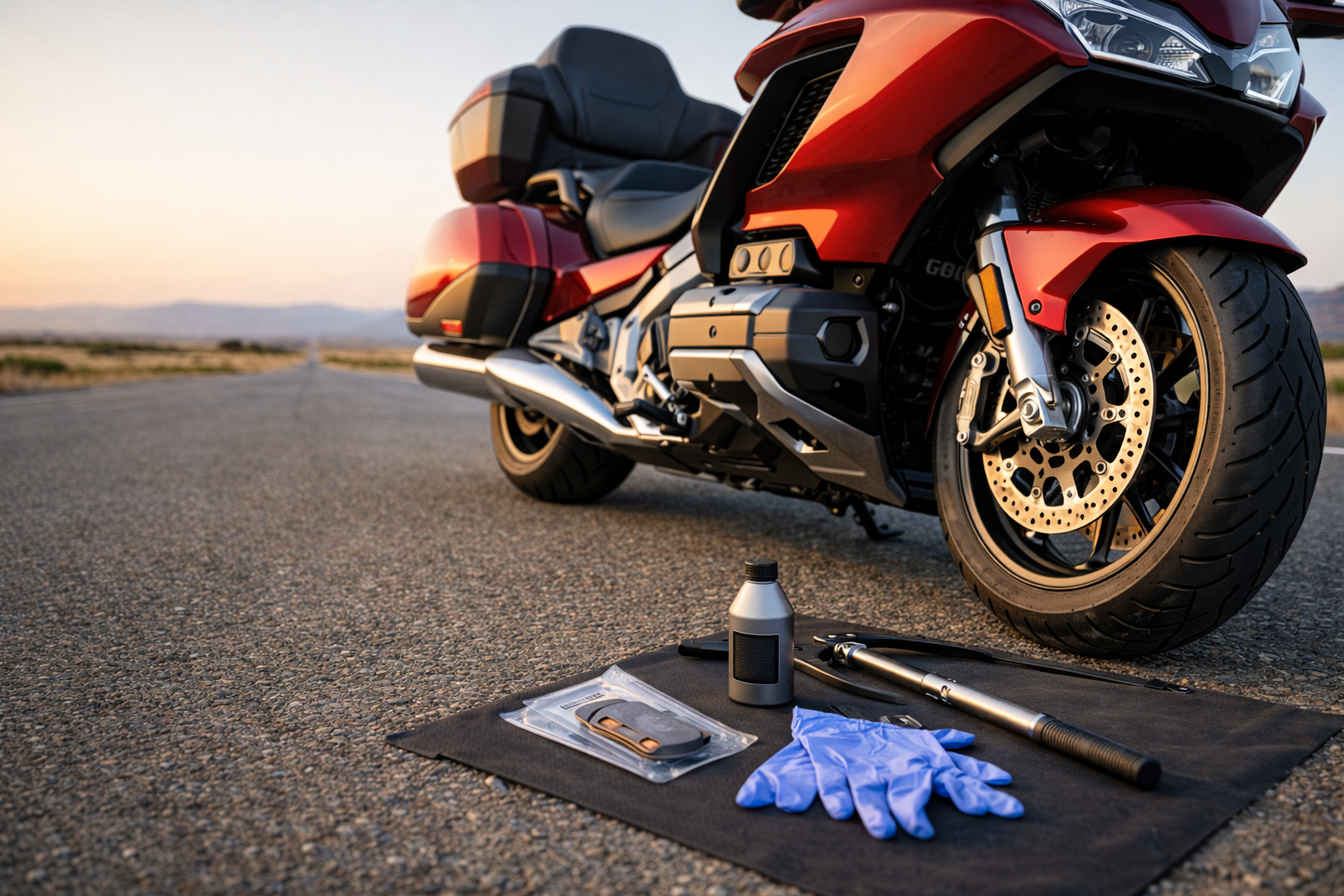
Before you load the panniers and point your front wheel at the horizon, your braking system deserves a calm, methodical check. I’ve seen riders plan routes, hotels, and fuel stops down to the minute, then discover on day one that their lever feels spongy or their rear pedal is fading on long descents.
In my experience, most “surprise” brake problems were visible (or feelable) weeks earlier with a simple inspection of motorcycle brake parts & pads and a few basic safety checks.
Why Brake Prep Matters More on Long Rides
On a big trip, brakes work harder and for longer. Mountain roads, heavy luggage, two-up riding, high speeds, and sudden weather changes all multiply heat and stress in your discs and hydraulics.
Heat is the enemy. It accelerates pad wear, can glaze friction material, and can thin out old brake fluid until lever travel increases. The goal of pre-trip maintenance is predictable braking: strong bite, consistent feel, and no surprises when the road turns technical.
Pre-Trip Brake Pad Inspection That Actually Tells You Something
Brake pads don’t fail in one dramatic moment most of the time. They gradually lose thickness, then performance drops, then the backing plate starts chewing into the rotor.
Start with a visual check through the caliper window.
How to Judge Pad Life Beyond “Looks Okay”
Look for remaining friction material thickness, not just “some pad still there.” Many manufacturers suggest replacement when the friction layer is around 2 mm, but check your service manual because designs vary.
If one pad is noticeably thinner than the other on the same caliper, that can hint at a sticking piston or uneven caliper movement.
Also pay attention to the pad surface. A shiny, glassy look can indicate glazing from overheating. Glazed pads often feel grabby at first and then weak under repeated braking.
If you’ve had a recent hard descent where the brakes smelled hot, it’s worth a closer look.
Signs You Should Replace Pads Before the Trip
If you hear squealing that wasn’t there before, feel pulsing, notice longer stopping distances, or see brake dust building quickly on one side, don’t gamble. Touring weight and long downhill braking will only amplify these symptoms.
Replace early and bed-in properly so you’re not doing the break-in process during the first 100 km of your journey.
Brake Fluid Checks for a Firm Lever and Stable Braking
Brake fluid is hygroscopic, which means it absorbs moisture over time. Water contamination lowers the boiling point, and boiling fluid equals fading brakes.
If your lever gets softer after repeated stops or feels inconsistent across temperature changes, fluid condition is a top suspect.
What to Check in the Reservoir
Inspect the fluid color and clarity. Fresh DOT fluid is usually clear to light amber. Dark brown, murky fluid suggests age and contamination.
Also check the level, but remember: as pads wear, fluid level drops slightly. Low level isn’t automatically a leak, unless it drops rapidly or you see wetness.
Look around the master cylinder, banjo bolts, brake lines, and calipers for seepage. Even a small weep can introduce air over time, turning a solid lever into a soft one.
Flush vs Bleed: What’s Worth Doing Before a Trip?
If the system is healthy and the fluid is recent, a quick bleed can remove micro-bubbles and sharpen feel.
If you can’t remember the last full change, do a flush and replace the fluid entirely. For touring riders, a fresh flush every 1–2 years is a sensible baseline, sooner if you ride in humid climates or do frequent aggressive braking.
Rotor and Caliper Safety Checks Riders Skip
Pads and fluid get the spotlight, but rotors and calipers quietly determine braking quality.
Rotor Condition, Thickness, and Heat Marks
Run your finger gently along the rotor surface (engine off, bike stable). Deep grooves, a pronounced outer lip, or blue discoloration can mean overheating or heavy wear.
Measure rotor thickness if you have a micrometer. Compare it to the minimum stamped on the rotor or listed in the manual. Thin rotors shed heat poorly and can warp more easily.
If you feel pulsing at the lever, that’s often a sign of rotor runout or uneven pad deposits. It doesn’t always mean a “bent disc,” but it does mean you should diagnose before loading the bike and heading out.
Caliper Pistons and Sliding Pins
Sticky pistons cause uneven pad wear and dragging brakes. After a ride, carefully check for unusual heat at one rotor compared to the other.
Also look for torn dust seals, heavy corrosion, or a piston that doesn’t retract smoothly. Sliding calipers rely on clean, lubricated pins. If they seize, the pad pressure becomes uneven and braking suffers.
The Quick Road-Test Routine I Recommend
Do your test ride in a safe area after any adjustment, pad replacement, or fluid service. Start slow and build up.
First, check lever travel and initial bite.
Then do several moderate stops to warm everything up.
Finally, do a few firmer stops without triggering ABS (if equipped) to confirm the bike remains stable and the lever feel stays consistent.
If the lever gets softer as heat builds, revisit the fluid and bleeding process.
Choosing the Right Components for Touring Reliability
For long-distance travel, consistency beats “maximum aggression.” Many riders do well with quality sintered pads for strong performance in wet conditions and long life, but organic or semi-metallic compounds can offer smoother feel depending on your bike and riding style.
Match the pad compound to your typical conditions, and always pair new pads with rotors that are within spec.
Also consider brake lines. If your bike has older rubber hoses, they can expand slightly under pressure, which dulls lever feel. Braided steel lines can improve firmness and feedback, especially when descending loaded.
Conclusion: Make Your Brakes Boring in the Best Way
Good brake maintenance is about removing uncertainty. When your pads are healthy, your hydraulic system is fresh, and your rotors and calipers are in spec, your stops become predictable, whether you’re riding solo on flat roads or fully loaded in the hills.
Do the checks early, test ride with intention, and treat any odd feel as a problem to solve before day one.
If you’re refreshing components for touring reliability, ShinyWing can be a helpful reference point when you’re looking to match the right fit and quality to your bike’s braking needs.
FAQs
How Soon Before a Trip Should I Service My Brakes?
Ideally 1–2 weeks before departure. That gives you time for bedding-in new pads, verifying there are no leaks, and doing a couple of test rides to confirm the lever feel stays consistent.
What Does a Spongy Brake Lever Usually Mean?
Most commonly it’s air in the system or old fluid that has absorbed moisture. It can also come from expanding rubber lines, a master cylinder issue, or a small leak allowing air to enter over time.
Can I Start a Trip With Pads That Are “Still Okay” But Not New?
Yes, but you need a realistic safety margin. If the pads are already near the wear limit, a long trip can push them into the danger zone quickly, especially in mountains or two-up riding.
Is It Normal for Brakes to Smell Hot on Descents?
A slight odor after heavy braking can happen, but strong burning smells, fading, or smoke are warning signs. Use engine braking, take breaks to let components cool, and inspect for glazing or fluid issues.
